
You could picture that as a big letter T, hence the term “T-account”. It should be noted that if an account is normally a debit balance it is increased by a debit entry, and if an account is normally a credit balance it is increased by a credit entry. So for example a debit entry to an asset account will increase the asset balance, and a credit entry to a liability account will increase the liability. In general, debits are used to increase asset and expense accounts, while credits are used to increase liability and equity accounts. This means when a company makes a sale on credit, it records a debit entry in the Accounts Receivable account, increasing its balance. Conversely, when the company receives a payment from a customer for a previously made credit sale, it records a credit entry in the Accounts Receivable account, decreasing its balance.
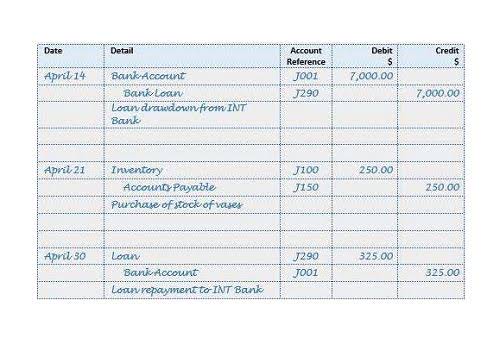
Rules of debit and credit
- Owners’ distributions are considered “contra-equity” accounts.
- Common expense accounts include Rent Expense, Salaries Expense, and Utilities Expense.
- The balance of an account increases on the same side as the normal balance side (T/F).
- The normal balances of accounts are important to consider when preparing financial statements.
- The terms “credit balance” and “debit balance” are often used interchangeably.
- Like assets, expenses also have a normal debit balance because incurring an expense increases the amount in that expense account.
When an account has a balance that is opposite the expected normal balance of that account, the account is said to have an abnormal balance. For example, if an asset account which is expected to have a debit balance, shows a credit balance, then this is considered to be an abnormal balance. Understanding that owners’ distributions reduce equity is important because it helps differentiate them from business expenses.

After the Temporary Accounts are Closed

Conversely, if you record a transaction on the opposite side, it decreases the balance of the account. Normal balance is the side where the balance of the account is normally found. Expenses are costs incurred by a business in the process of generating revenue. Common expense accounts include Rent Expense, Salaries Expense, and Utilities Expense. Like assets, expenses also have a normal debit balance because incurring an expense increases the amount in that expense account.
Credit normal balance and debit normal balance
An increase in expenses and losses will cause a decrease the normal balance of a capital account in cash flow from operations because more cash is going out than coming in. Similarly, if a company has $100 in Sales Revenue and $50 in Sales Returns & Allowances (a contra revenue account), then the net amount reported on the Income Statement would be $50. The account is debited when expenses are incurred and credited when payments are made. The credit side of a liability account represents the amount of money that the company owes to its creditors. A healthy company will have more assets than liabilities, and will therefore have a net positive cash flow.
What is the Normal Balance for Contra Accounts?
For example, you can use a contra asset account to offset the balance of an asset account, and a contra revenue accounts to offset the balance of a revenue account. Finally, Mental Health Billing the normal balance for a revenue or expense account is a credit balance. Double-entry means an accounting system in which every transaction is recorded with amounts entered in two or more accounts. Further, the amounts entered as debits must be equal to the amounts entered as credits. If this is done for every transaction and without errors, then all the amounts appearing in the accounts will have the total amount of debits equal to the total amount of credits. Here’s a table summarizing the normal balances of the accounting elements, and the actions to increase or decrease them.
- Debit pertains to the left side of an account, while credit refers to the right.
- Paid in capital is liability for business and like allliabilities it also has credit balance as normal balance.
- If an account has a Normal Credit Balance, we’d expect that balance to appear in the Credit (right) side of a column.
- In accounting, understanding the normal balance of accounts is crucial to accurately record financial transactions and maintain a balanced ledger.
- For example, if a company wanted to increase its inventory (an asset), it would make a journal entry to debit inventory and credit cash (another asset).
- This principle is a direct extension of how debits and credits affect different categories of accounts within the accounting system.
And finally, asset https://lt-wp-2024-staging.3cs.website/math-majors-make-great-accountants/ accounts will typically have a positive balance, since these represent the company’s valuable resources. This means that when you make a credit entry to one of these accounts, it increases the account balance. For example, the normal balance of an asset account is a credit balance. Accounts are the bookkeeping or accounting records used to sort and store a company’s transactions. Hence, these accounts are also known as general ledger accounts. Hopefully this will give you a deeper understanding of the terms debit and credit which are central to the 500-year-old, double-entry accounting and bookkeeping system.
What is the Normal Balance for Owner’s Withdrawals or Dividends?
Definition of ‘normal balance’ The normal balance of an account is the side of the account that is positive or increasing. The normal balance for asset and expense accounts is the debit side, while for income, equity, and liability accounts it is the credit side. All this is basic and common sense for accountants, bookkeepers and other people experienced in studying balance sheets, but it can make a layman scratch his head. To better understand normal balances, one should first be familiar with accounting terms such as debits, credits, and the different types of accounts. Basically, once the basic accounting terminology is learned and understood, the normal balance for each specific industry will become second nature.